Mirage 7 Review
Mirage 7

Publisher:
Developer:
Genre:
PEGI:
Comments:
Mirage 7 isn’t the kind of game that tries to grab you with explosions or spectacle. Instead, it slowly pulls you in with atmosphere, mystery, and a sense that something isn’t quite right beneath the sand. Developed by Drakkar Dev and published by Blowfish Studios, this PlayStation 5 adventure feels like a throwback to an older era of games, where patience and curiosity mattered just as much as reflexes. It won’t be for everyone, but for the right player, Mirage 7 can be quietly unforgettable.
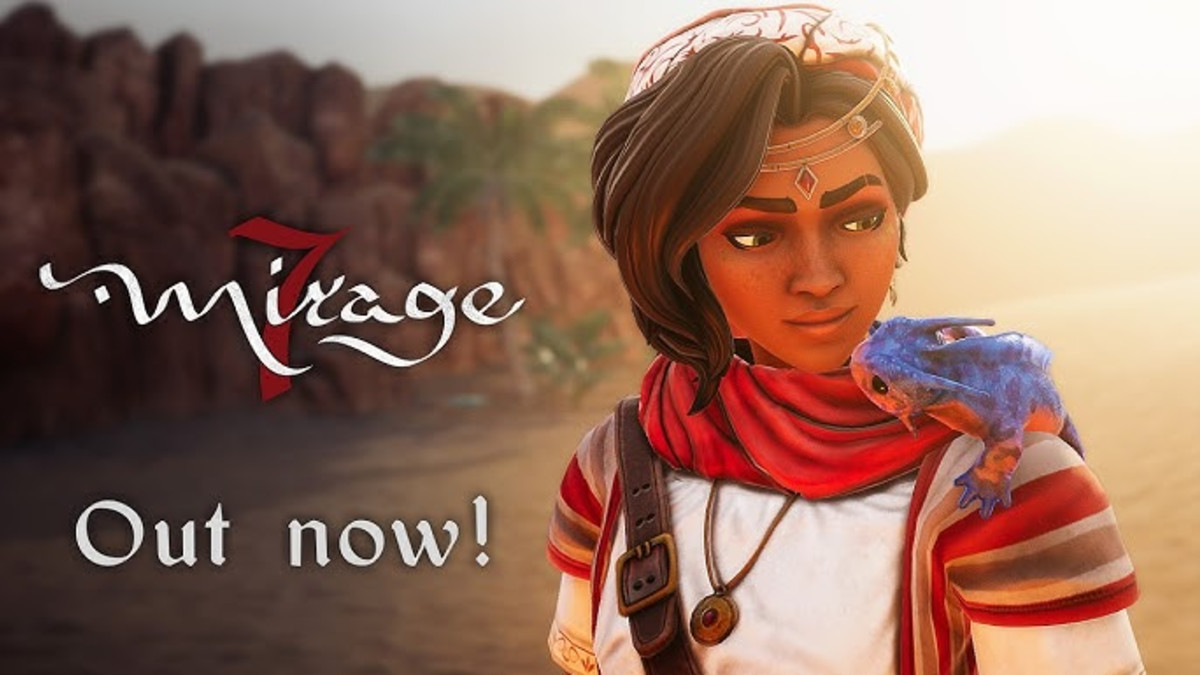
You play as Nadira, a young woman crossing an unforgiving desert in search of the Oasis of Jala and the Moon Palace, home of the mythical Princess Taishma. Nadira believes this lost princess is the only one who can bring her sister back from the dead, and that personal motivation gives the story real emotional weight. Early on, Mirage 7 makes it clear that this isn’t a simple fantasy tale. Strange sci‑fi elements creep in almost immediately, from crashed drones to hints of secret military projects buried beneath ancient ruins. The game constantly plays with the tension between myth and technology, and that contrast gives the world a haunting, dreamlike quality.
Nadira isn’t alone on her journey. Her loyal lizard companion, Jiji, is far more than a cute sidekick. Jiji plays a huge role in both gameplay and storytelling, and the bond between the two characters is one of Mirage 7’s strongest elements. You’ll frequently switch control to Jiji to crawl through tight spaces, activate mechanisms, or scout ahead using a special vision mode that highlights important objects and symbols. This mechanic not only adds variety but also reinforces the feeling that Nadira truly relies on her companion to survive.
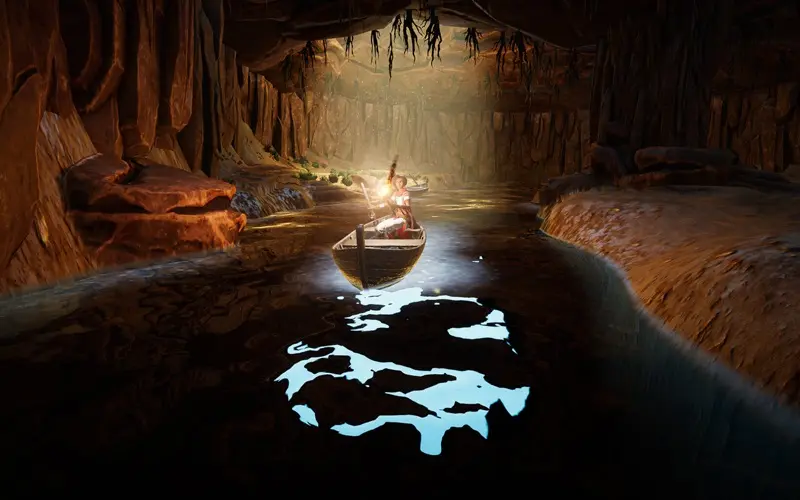
Exploration is where Mirage 7 really shines. The desert is harsh and lonely, broken up by ruins, temples, caves, and strange underground facilities. The game isn’t open world in the modern sense, but each area feels carefully designed to encourage slow, thoughtful movement. You’ll gather resources, craft simple tools, and solve environmental puzzles to move forward. On PlayStation 5, the experience feels smooth and stable, with quick load times that help maintain immersion. The DualSense features are subtle, but small touches like gentle haptic feedback while walking through sand help ground you in the world.
Puzzles are clearly the heart of Mirage 7. Most challenges feel organically tied to the environment rather than dropped in for the sake of gameplay. You’ll manipulate light, symbols, switches, and elevation, often using both Nadira and Jiji together to find solutions. Some of the later puzzle sequences, especially inside large temple areas, can last a long time and demand serious attention. When everything clicks, they’re deeply satisfying, but there are moments where the game tests your patience, particularly if you miss a small visual clue and end up wandering in circles.
Combat, thankfully, takes a back seat, because it’s easily the weakest part of the experience. Nadira’s melee combat feels stiff and outdated, with awkward animations and basic enemy behavior. Fights are rarely exciting and can become frustrating when facing more than one enemy at a time. Once you gain access to the slingshot, combat becomes more manageable and far less irritating, which feels like the developers quietly encouraging players to avoid melee whenever possible. Mirage 7 clearly isn’t interested in being an action game, and it’s at its best when enemies serve as obstacles rather than focal points.
Visually, Mirage 7 doesn’t push the PlayStation 5 to its limits, but its art direction carries a lot of weight. The desert landscapes are beautiful in a restrained way, and the ruins feel ancient and mysterious without being overly detailed. There’s a slightly rough, old‑school feel to character animations and platforming, and jumps can sometimes feel imprecise. Still, this roughness oddly fits the game’s identity. Mirage 7 often feels like a modern echo of late ’90s and early 2000s adventure games, and that nostalgic edge will either charm you or push you away.
The sound design does a lot of heavy lifting. The music is subtle and atmospheric, often fading into the background rather than demanding attention, which suits the lonely tone of the journey. Voice acting is solid overall, though Nadira tends to repeat hints during puzzles a bit too often, which can feel hand‑holdy if you prefer figuring things out on your own. Even so, the audio presentation does an excellent job of reinforcing the game’s themes of grief, hope, and determination.
From a technical standpoint, Mirage 7 runs well on PS5. Performance is stable, load times are short, and there are no major technical issues to distract from the experience. It may not offer flashy graphical modes or endless customization, but it feels polished where it matters.
In the end, Mirage 7 is a game that knows exactly what it wants to be. It’s slow, thoughtful, occasionally clumsy, and deeply atmospheric. Players looking for constant action or modern AAA polish will likely bounce off it. But if you enjoy story‑driven adventures, environmental puzzles, and worlds that feel strange and melancholic, Mirage 7 has something special to offer.
It’s not perfect, and it doesn’t try to be. Mirage 7 stands out precisely because it’s willing to be quiet, uncomfortable, and a little awkward. In a genre crowded with familiar formulas, that willingness to be different makes it worth remembering.
Article By Kevin Austin