Huntsman (PC) Impressions
If you’ve ever felt your stomach drop at the sight of a spider, Huntsman is about to turn that fear into a full-blown survival experience. This indie horror title doesn’t rely on gore or cheap jump scares—it thrives on atmosphere, tension, and the primal dread of being hunted by something you can’t fight.
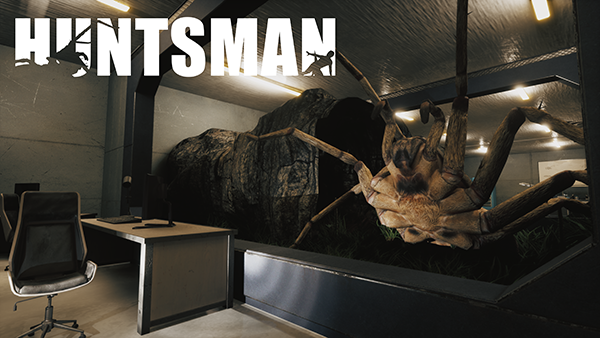
The game begins in Atherton Laboratories, a research facility that feels sterile and lifeless—at first. You’re the new security guard, clocking in for what should be a routine shift. But the silence is deafening, and the deeper you go, the more you realize something is very wrong. The lights flicker, the corridors stretch endlessly, and then you hear it: the faint, rhythmic tapping of legs on tile.
This isn’t a haunted house with blood on the walls. It’s a clinical environment, which makes the horror feel disturbingly plausible. The absence of bodies or obvious carnage adds to the unease—you’re left wondering what happened here, and why you’re still alive.
Unlike most horror games, Huntsman strips away the comfort of combat. There are no guns, no crowbars, no heroic last stands. You’re defenseless, and that vulnerability is the beating heart of the experience. Your only tools are distractions—throwing objects to lure spiders away while you sneak past. It’s a clever mechanic that forces you to think strategically, but it’s not perfect. Picking up items can feel awkward, and holding something blocks your ability to open doors, which can lead to frustrating stop-and-go moments.
This design choice is deliberate, though. It keeps you on edge, reminding you that every second counts. You’re not a soldier—you’re prey.
Let’s talk about the real stars: the spiders. They’re not cartoonish monsters—they move with unsettling realism. Huntsman spiders, tarantulas, orb-weavers, and trapdoor spiders all make appearances, each with unique behaviors. They stalk, they wait, they pounce. Sometimes they freeze, forcing you to wonder if they’ve lost interest—or if they’re planning their next move.
The AI feels unpredictable, which is exactly what you want in a horror game. Every encounter feels like a gamble, and that unpredictability fuels the tension. Arachnophobes will find this game almost unbearable—in the best possible way.
The sound design is minimal but effective. Silence dominates, broken only by your footsteps and the unnerving sound of spider legs tapping—a noise that somehow manages to sound like a basketball bouncing in the dark. There’s no dramatic score to guide your emotions, which makes every sound matter. When you hear scuttling behind you, your pulse spikes because you know it’s real.
That said, some players might crave more depth—ambient music, environmental sounds, or voice acting could have added layers to the experience. But the stark audio landscape does serve its purpose: isolation.
Here’s where Huntsman stumbles. The environments feel functional but uninspired. Labs lack personality, and there’s a noticeable absence of environmental storytelling—no scattered webs, no overturned furniture, no signs of struggle. These details could have amplified the horror, making the world feel lived-in and abandoned rather than simply empty.
The spiders themselves look good—detailed enough to trigger that primal fear—but the overall visual presentation feels dated. It’s not a dealbreaker, but it does pull you out of the experience at times.
The full game runs about three hours, which is short but intense. It’s a sprint rather than a marathon, and for some players, that’s perfect. There are around 13 Steam achievements, offering a bit of replay value for completionists. However, certain sections—like the terrarium puzzle—can feel tedious, breaking the flow of tension.
If you’re an indie horror fan who values atmosphere over action, Huntsman is worth your time. It’s a game that thrives on fear, not firepower. But if you prioritize polished mechanics, rich visuals, or deep narrative, you might find it lacking.
Article By Kevin Austin