The Peak Team Review – Rangers Working Together
Cooperative games are becoming a lot more popular, but far too often they are still relegated to campaign or adventure games. Don’t get me wrong, we absolutely love campaign adventure games, but having one-off games readily available to play with ANY group is more enjoyable for our situation, and The Peak Team offers that to us in spades.
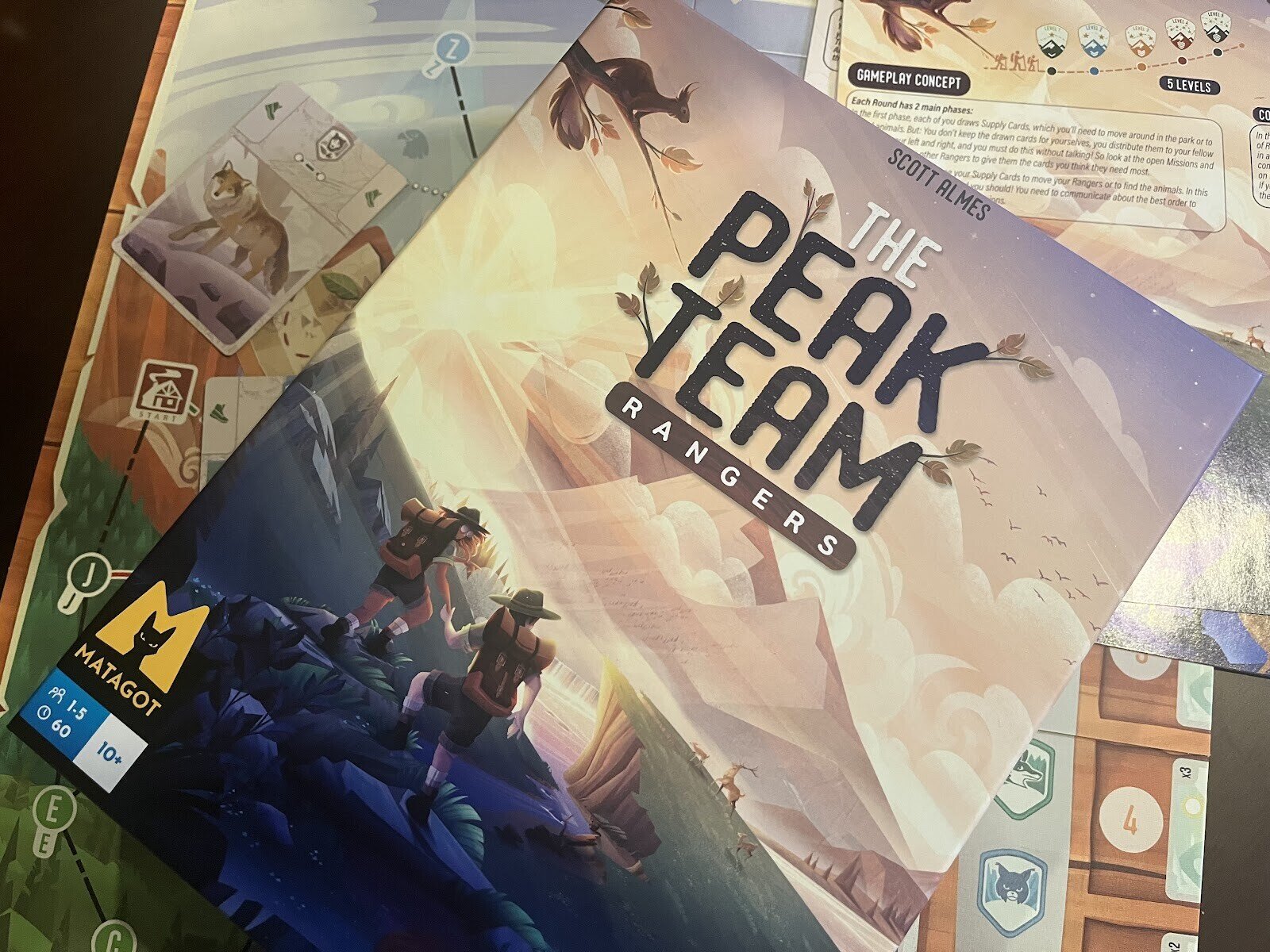
Whether you are playing with a new group or an experienced crew, the 5 available levels of difficulty will have what you are looking for. Is scaling mountains and going down rivers to scope out animals and finish missions as much fun as it sounds? Let’s take a look.
We have enjoyed all four included scenarios that The Peak Team offers; there is no requirement to play these scenarios in order, and we found that each subsequent episode was typically just more difficult than the last, to a point where with an experienced group, we just stick to the final few. The Peak Team is a limited communication game, so certain elements of the game require players to make their own decisions, which briefly eliminates the alpha gamer problem a lot of cooperative games have. I say briefly, because it will ultimately rear its ugly head with the wrong group.
At its most basic, players will be moving their pawns around the central board, using cards to take specific types of paths – hiking, waterways, snowshoeing, mountain climbing, etc. As the game progresses round to round, players need to complete missions by maneuvering to specific locations on the board as indicated on their mission cards. Each round of the game will have a set number of additional missions, and if too many remain when the round is over, players lose the game.
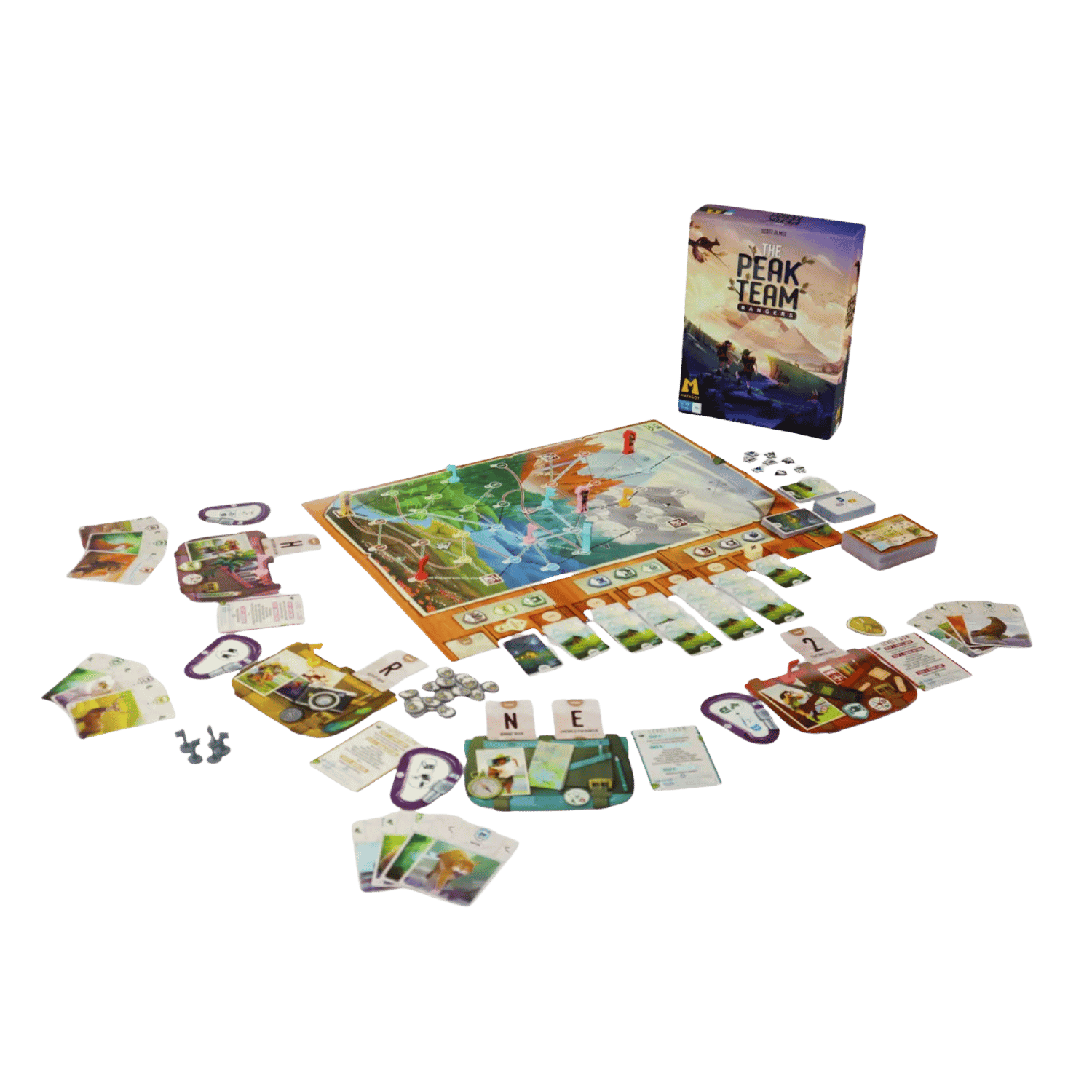
The most important part of each round, though, is where the first bit of limited communication begins. At the start of each round, players are dealt a few cards, and then without talking, they must evenly distribute those cards between the person on their left and the person on their right.
This includes cards kept from a previous round. Deciding on who gets what isn’t that random, though, as you’ll be able to see what missions they are trying to complete, and will obviously try and provide them cards that will help them do that. The trick is trying to divide your cards equally to make sure players are doing their best to optimize their turns.
Not only do you need to get to specific locations, but you might need to stop at ranger stations as well to distribute more missions to players who don’t already have two – after all, as we noted, if you have too many missions left over next to the board when the round ends, you instantly lose!
There is greater complexity with each scenario. In the first, all you need to do is complete missions and rescue all the animals, done by playing an animal card from your hand for it’s animal instead of its route, matching the card to the animal in the region you currently occupy.
In scenario one that was easy enough, but as you continue on with the game you’ll introduce special missions, blocked routes, weather and so much more. There are positive additions as well, such as special player powers and animal tokens that provide additional benefits. If the first scenario feels too easy, just wait till you dive into the second of the two rulebooks for scenarios 3-5!
There are two key decisions that players will need to make on their own in this game – when passing cards to the left and right, and when handing out mission cards when on a ranger station. Discussions must halt at those moments, and everyone controls their own game.
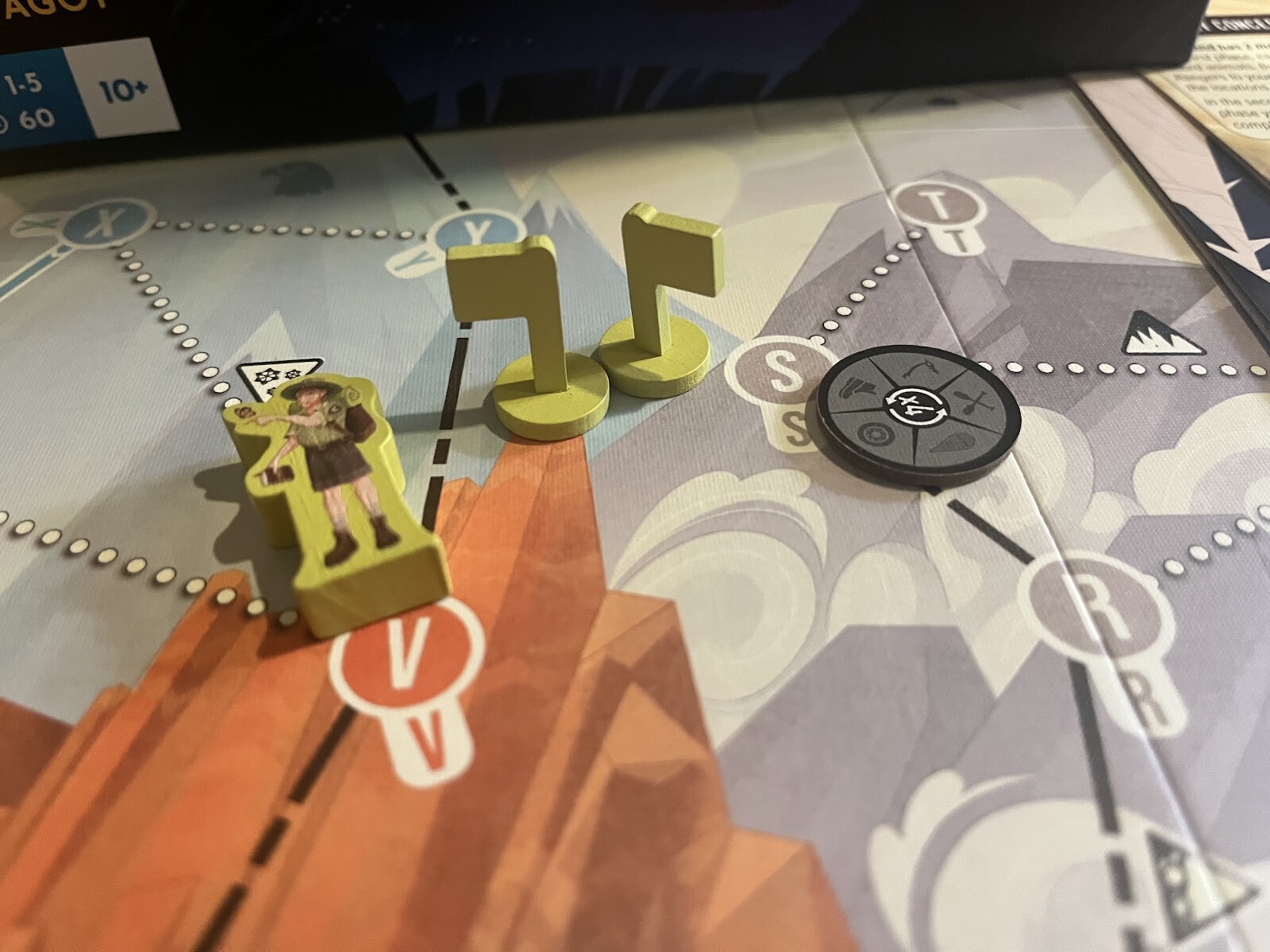
That said, as with many cooperative games – so this is obviously NO fault of The Peak Team – alpha gaming is definitely going to happen. It is quite easy for one player to begin dominating the strategic direction of the game, indicating how each player’s special wild movement should be used, how cards should be plated to maximize benefits, and so much more. It can be a frustrating experience if you hate that environment. On the flip side, though, I found this a very rewarding cooperative game if played with the right group; and honestly, that can be said to all cooperative experiences.
Even though our gaming group has made it through all five scenarios included in The Peak Team, it’s the card distribution system that will keep this game around as I find it unique and not something a lot of my board game friends see on a regular basis.
It perhaps isn’t the mind blowing mechanic that makes this one of the best cooperative games of all time, but I love the setting and idea behind being a bunch of hikers out in the wild. I also enjoy that the entire game cannot be dominated by one individual person, as the game forces decisions on individuals that they themselves must make. It allows for quieter and less assertive players to have a really positive impact on the experience, and have a say in how it all plays out.
I’m hopeful that more scenarios might be made available for The Peak Team, or a second release with a new setting, new animals, and perhaps new challenges as well. That said, even if you only play through the 5 included scenarios one time each, I think it’s good value for money.
Article By Adam Roffel