Kinfire Chronicles: Night’s Fall Board Game Review
It’s been a while since I really enjoyed a campaign game, not because I cannot get into the stories, but because they take too long, are too cumbersome to table, and ultimately the group I play with just runs out of time, interest, or both. When I first saw Kinfire Chronicles being played by some media folks on YouTube I was instantly intrigued – a cooperative, deck building experience in the Kinfire franchise, but with games lasting from 30 to 45 minutes? And setup in less than 5 minutes? Sign me up.
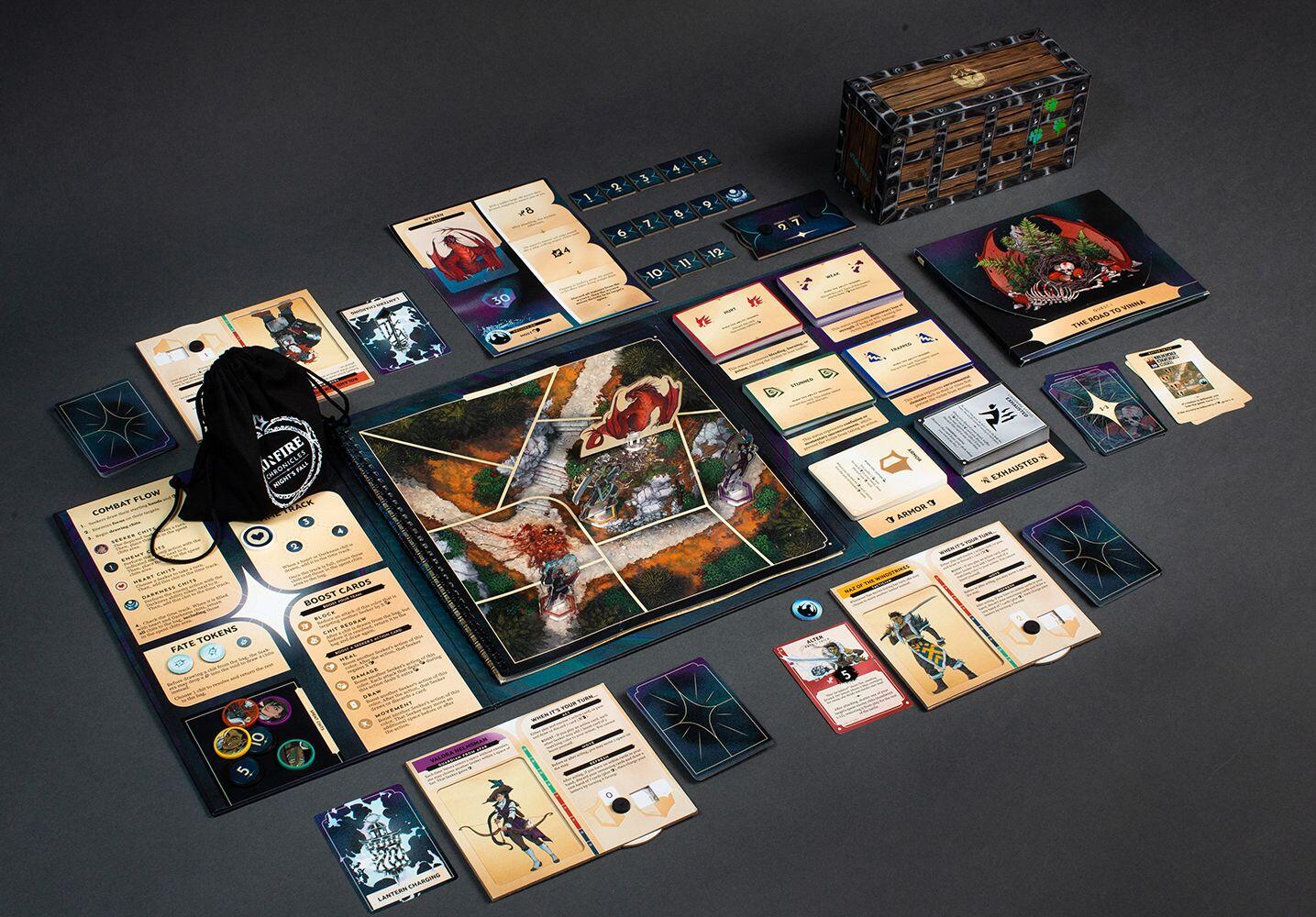
I’m not sure if it is because of my recently arrived board game table – so we don’t have to put the game away, just put a topper on it – or because of the game, but in less than two weeks we have blown through a ton of Kinfire Chronicles content. Sure, we’ve missed a few things here and there based on decisions we made, but we saw a lot of this game, and it was absolutely fantastic.
Everything about Kinfire Chronicles: Night’s Fall is bite sized, and I say that in the best way possible. A story that doesn’t require me to read walls and walls of text. Game play that is over – either positively or negatively – in around 30 minutes with two players, and one that looks fantastic, plays fantastic, and was simple enough to digest. I say all of those things, even the things that might sound negative, with the utmost praise. I absolutely love Kinfire Chronicles, and it’s right up there with my favorite campaign games of all time.
It’s the simplicity of everything that makes it so approachable, yet there is depth in the deck building, dialogue options, quest paths, and more. Each player gets a deck of 18 cards, built with 9 sets of cards – an action card used on your turn, and a boost card used on other players’ turns.
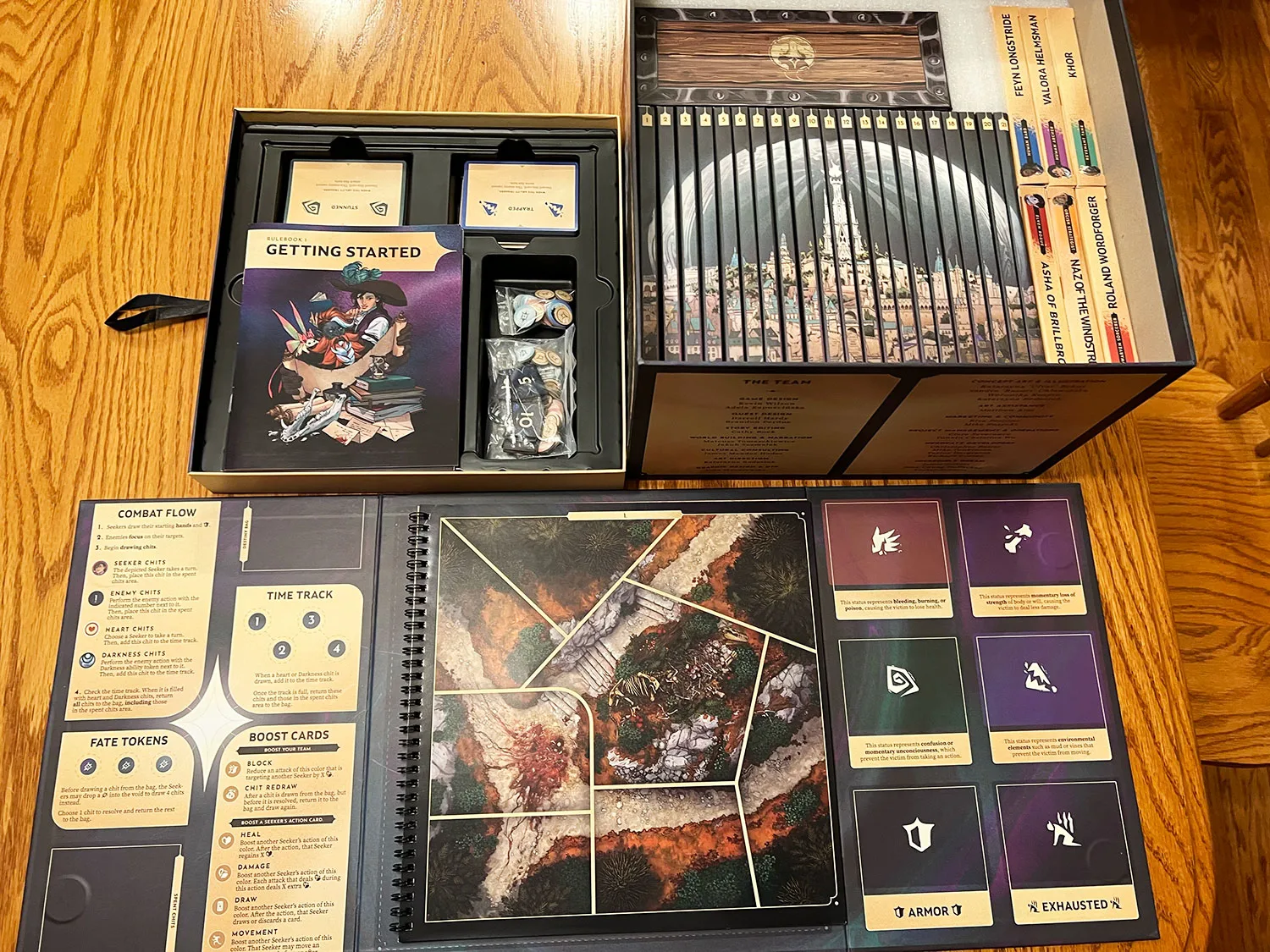
Kinfire Chronicles uses the same color coded system as Kinfire Delve: you have green, blue, and red cards that align with various attributes, and white ‘wild’ cards that can be anything.
On your turn (in battles) you’ll choose a card from your hand to play, which is generally an attack, and then other players can ‘boost’ that card with cards of their own. Boosts might allow you to deal extra damage, draw or discard a card, move and extra space, and numerous other benefits. With a bunch of players, it is satisfying when everyone gets a solid boost card applied to your action, perhaps hitting an enemy for 5 or 6 damage, as opposed to 3!
It’s a system that works so well, and coordinating a good team and discussing deck upgrades is pretty important. Every deck has some constraints – 18 cards, and a specific combination of colors required – but by finding treasure chests with loot, and purchasing items at shops, you can take your deck from something pretty basic to something tailored for your specific group.
The characters you bring along on your adventure actually matter, and provide a wide variety of in-game benefits. These characters also get fleshed out throughout the story, diving deeper into their personalities and goals. Certain story moments might provide bonuses to certain characters, depending on who you have in your party. It’s all cleverly written, and guarantees that if you take different characters with you the second time through the game, you’ll see and do different things from time-to-time.
And ultimately that is where Kinfire Chronicles shines the brightest: world and character creation and progression. Earlier I noted that many campaign games don’t get finished with our gaming group because they are just too dang long.
The story can be outstanding, but when 30% of my play time is simply reading entries in various books, I might as well just read a book. That doesn’t happen in Kinfire Chronicles, yet I feel the story is just as fleshed out as other games. I care about the characters in my party, and the plight of the village just trying to light their Lighthouse.
I cared about the side quests I undertook, trying to determine who was a criminal, who was in need of help, etc. With so few words, the design team really drives home all the key points in quick succession, which means it’s not only an impactful and story/character rich experience, but a fairly fast paced one as well.
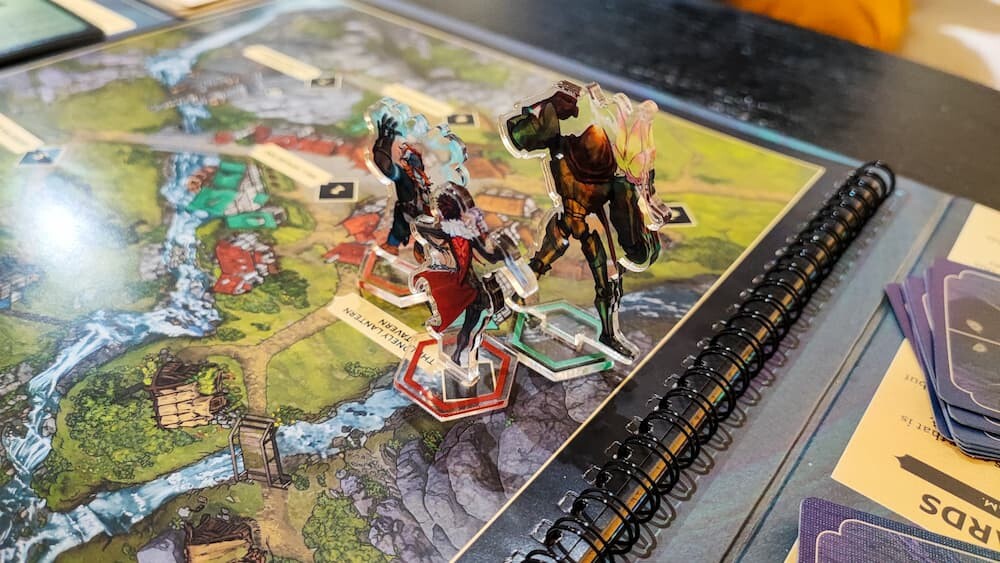
What’s most impressive is that this is all done without the aid of iOS, Android or Steam applications, which so many campaign games are relying on in 2025. I have nothing against application based games, and honestly they have delivered some of my favorite gaming campaign memories. But the depth here created from the simplicity of the experience, and without an app, is too impressive to not explore.
If you’ve played any of the Kinfire games – Kinfire Delve and Kinfire Council – and haven’t taken Kinfire Council for a spin yet, you are doing yourself a disservice. Not only does it flesh out the word you are constantly exploring across all three games, but it takes the concepts you know from Delve and turns it into an epic experience.
And trust me on this, it is an experience you won’t soon forget.
Article By Adam Roffel