Almanac: The Crystal Peaks Board Game Review
It’s not often that you tell someone, “Hey, tonight we are playing a worker placement flip book!” But that is what you are doing here, and while the concept sounds a bit weird, I was intrigued by how it works. As you flip through the game’s various pages, the rules for how you play the game will change. While this might frustrate some, I found it super compelling. Almanac: The Crystal Peaks might not be for everyone, but it sure was for me.
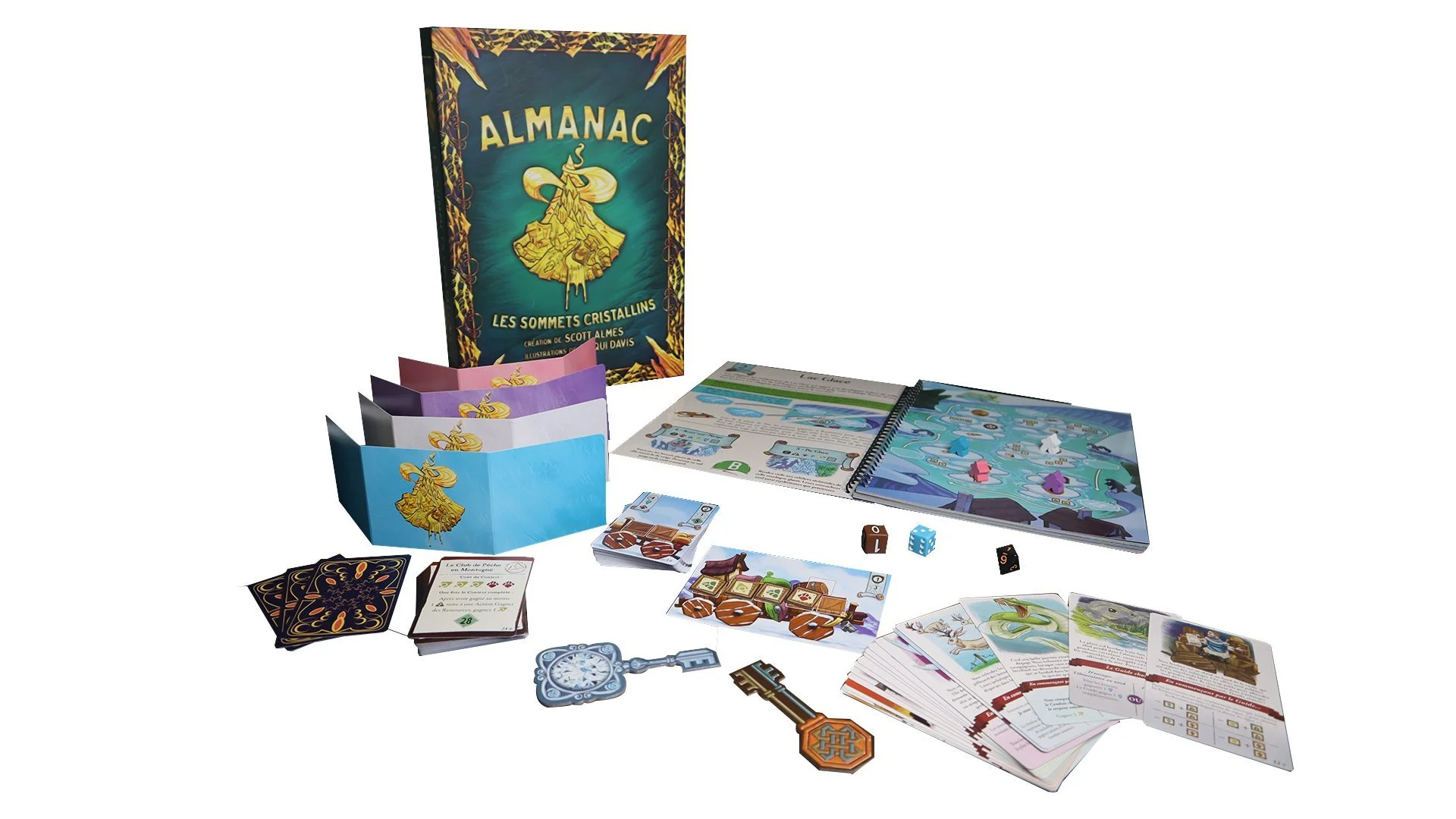
At its most basic, this is a worker placement game in that you place a worker down onto the board and take some corresponding benefit for action. Of course with a variety of different games happening within this one game, how that works on each page is wildly different, and we won’t be going into all of that here. Like with other worker placement games you are going to collect stuff, sell stuff, move stuff, and ultimately do a lot of things with a lot of stuff to get points.
Your caravan and workers will be central to your gameplay, and adding to your caravan and acquiring more workers will ultimately let you do more – you’ll want to protect your caravan as well, so be ready and prepared to do that.
What makes this so compelling and unique is how things change. In most worker placement games, you might have half a dozen different options to choose from, and the game strategy revolves around when you take each to maximize your points. Here, the game is always changing. For super strategic players who like to have all the information up front, this isn’t going to be something they enjoy. But for those that like things changed throughout the game, this might easily become a new favorite experience.
Players can have control over the game if they want, though, because as each round ends and caravans begin traveling to the next location (page), players secretly bid any amount of gold. After revealing their hands, the player who reveals the MOST gold gets to choose which location they want to visit next (from a few options) but only pays gold equal to the amount of whomever bid the least. So if a player doesn’t care too much about which location the caravans go to next, there is still an incentive to put a decent amount of gold into your bid to force other players to pay a higher cost. I don’t generally love bidding in games, but this is something I can get behind.
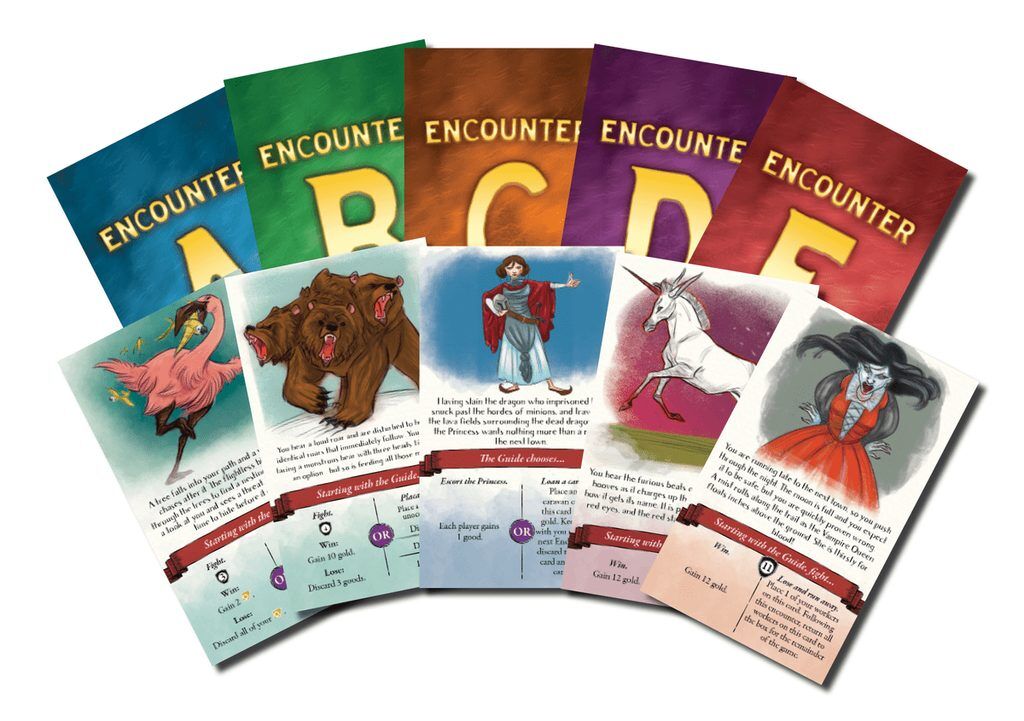
There are also event cards that will be flipped after each round and these cards are fairly varied. Some are basic, others might make you fight things, and so on. There is a stack for each lettered event (A-D) so you never know what event you might get game-to-game. And since you are choosing different pages to go to each round as well, you won’t see all the different maps in a single game either.
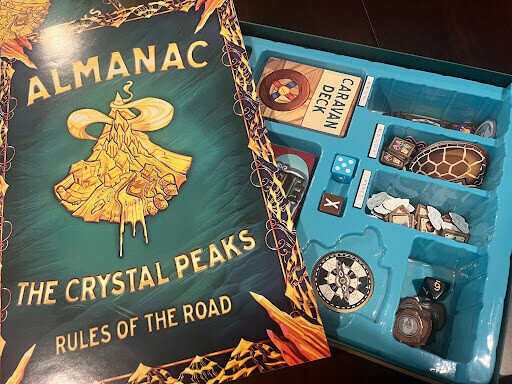
I think the downside to this game is something we mentioned in our components overview and impressions article: there is work involved with each map you play, which includes pulling map specific tokens out of the box for use that round. It’s not a massive problem, but as I don’t love the storage solution this game offers, it’s a bit more work than I would like between rounds. I’ve learned that this is a price I’m willing to pay to experience Crystal Peaks with friends, but not everyone will share my enthusiasm for the game. This is definitely a “Is it worth it” experience, and for some, the answer will be no.
That said, there are enough unique mechanics here to keep me playing for a long time. Every map brings something new to the table, and while I do have some familiarity with some of the maps after having played for almost two months, every game still feels fresh and exciting. Although I might tire of the constant setup and tear down map-to-map, I’m thoroughly enjoying my time with the game right now, and that’s enough of a reason to keep it on my shelves instead of moving on from it after my review period ends.
 Visit BoxKing Gaming and Get Your Table Today
Article By Adam Roffel