Zenith Board Game Review
A few days ago I wrote about Yokohama Duel and how crunchy, 2-Player games were so rare. As much as I enjoyed that experience, lighter quicker games for two players is also something I really enjoy, and Zenith scratched that itch for me. It is worth noting here that Zenith can be played with 4 players, on teams of two, but I have only played the 2-Player (base) version of the game!
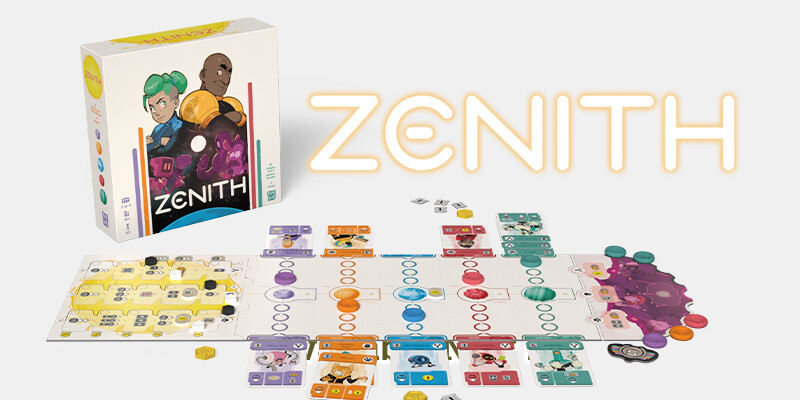
In Zenith, players will be playing cards into rows, triggering abilities, earning credits, and attempting to move colored discs to their side of the board. Cards can do a variety of things, like provide you with additional credits, allowing you to move discs (sometimes for free, sometimes at a cost), perform leader abilities and even move up technology tracks. While it might sound complicated, it’s a very tight game that plays in 30 minutes or less, including the teacher!
The game immediately ends if one player collects three of the same colored discs, four different colored discs, or 5 discs total. While it might sound easy to snag a disc or two, savvy players will use their cards to move multiple discs at once, which creates a really great dueling game.
As with any game that relies heavily on card use, there is some luck to how it all falls into place. In one game, for example, my friend didn’t draw a single orange card for the entire game, and wouldn’t you know it: I won by collecting three orange discs. Even when this happens, though, there are other ways to move discs. The technology track provides many ways to move a disc of your choice, and many other cards allow you to move discs of a different color, or potentially move all the discs at a cost of one card per column.
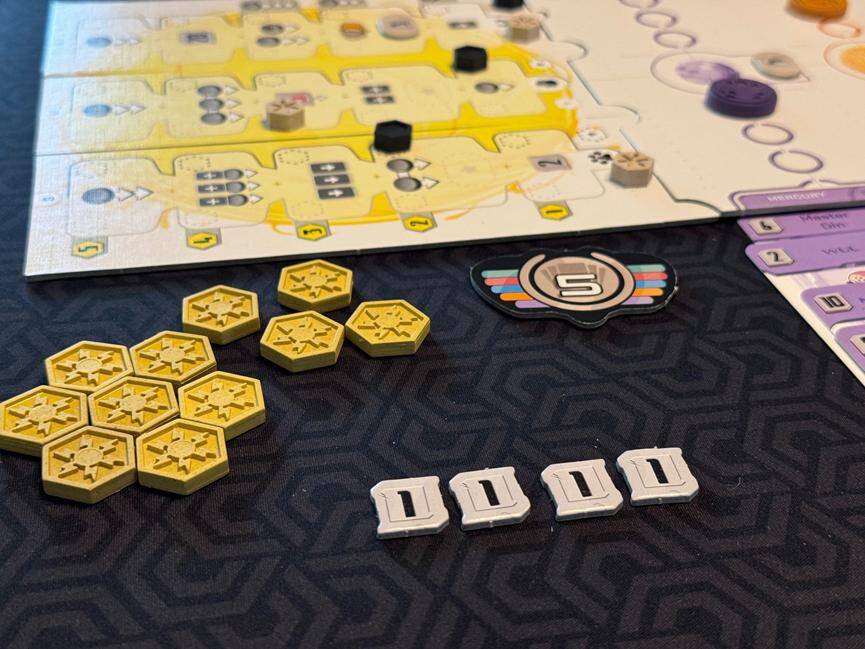
There is mitigation, but even that won’t always work. Free disc movements are available, but not unlimited, and they generally take an action to accomplish. So it can happen: not drawing enough cards of a specific color can be your downfall, and it won’t be your fault either.
That said, this doesn’t seem to be a big problem. It only happened in my games that one time. Some will use that one-time experience to detract from the entire game, but not me. I find Zenith so compelling every time I play. It is the number of decisions that makes this feel so good: do I move discs on my side even closer? Do I pull discs on my opponents side away? Do I use a turn to grab the Leader token and increase my hand size? How valuable is the tech currency needed to move up the tech tree?
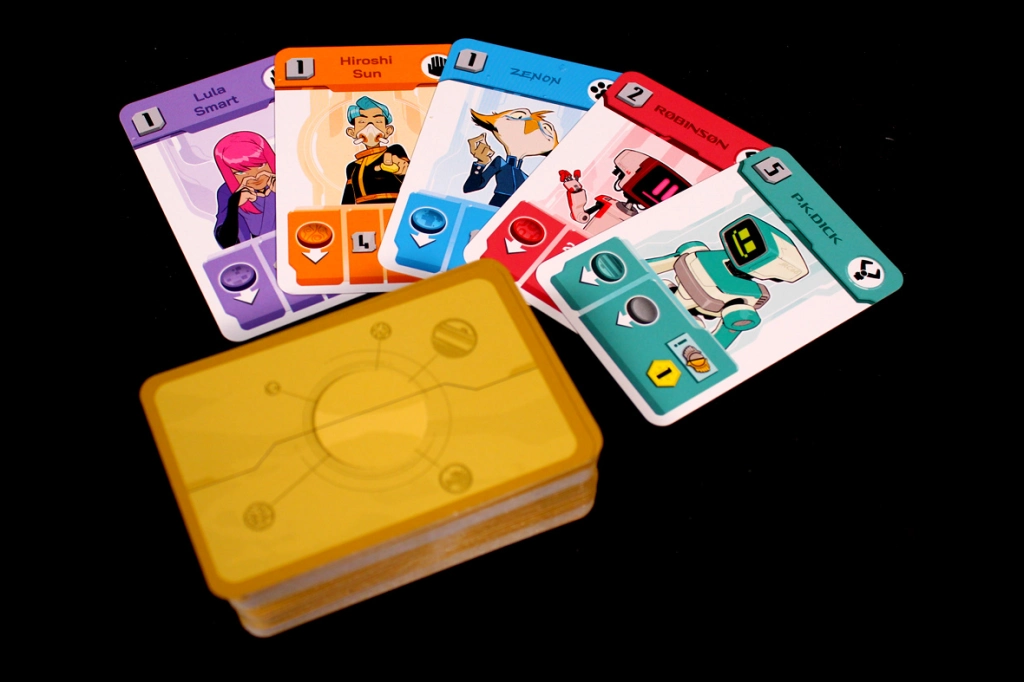
With all of these questions comes a number of different ways to approach the game, and so far there doesn’t seem to be one strategy that tops them all. I’ve seen games end with winners moving really far up tech trees. I’ve seen games end where players barely move on the tech tree. And I’ve seen games won AND lost by players overwhelming one specific card color. How you approach a game of Zenith is as much about what you have as what your opponents are doing themselves. And as opponents will have wildly different strategies game-to-game, it keeps Zenith feeling fresh long after you probably think it should be falling flat.
For us, Zenith hasn’t fallen flat yet, and since it is easy to teach and quick to play, it’s a game that will be hanging around for the near future at least!
Article By Adam Roffel