Snowcrest Board Game Review
Snowcrest is likely to be a divisive game, and even when I wasn’t having the most fun with the experience, I was still intrigued by the process. It’s been a while since a single game has given me wildly different gameplay experiences which makes it hard to decide whether this one will stick around long term or not. That said, there are some great mechanisms here, so at the very least I’ll encourage you to research and not just take my word for it!
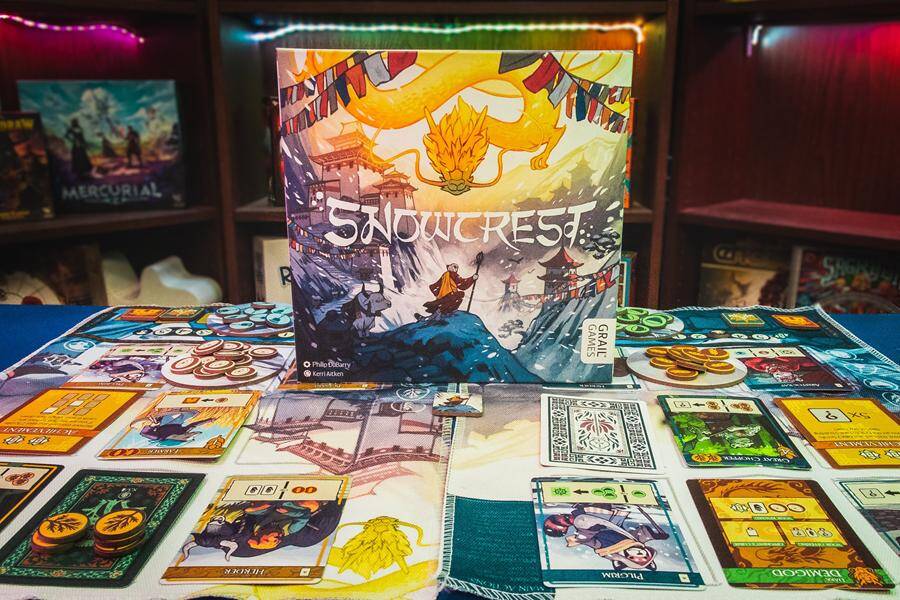
In Snowcrest, players will be placing cards into a tableau, activating them, and ultimately trying to earn scrolls, the game’s point currency. On their turn, players can do one of three things.
Activate: Flip a villager in your village and flip them facedown to take the action on their card.
Add a Villager: Allows you to add a villager from the central display or from your hand, and then activate that villager. These villagers cost barley. Villagers can be placed on an empty or filled location.
Resting: If you have three cards in a row, column, or diagonally you MUST perform the rest action. Resting allows you to flip cards face-up again, and earn resources on the backside of flipped cards and the front side of unflipped cards.
As you can see, the entire gameplay loop of Snowcrest isn’t all that difficult – in fact, this is a pretty easy game to teach and to table, which makes me REALLY want to keep it in my collection. I also like the strategic elements presented here.
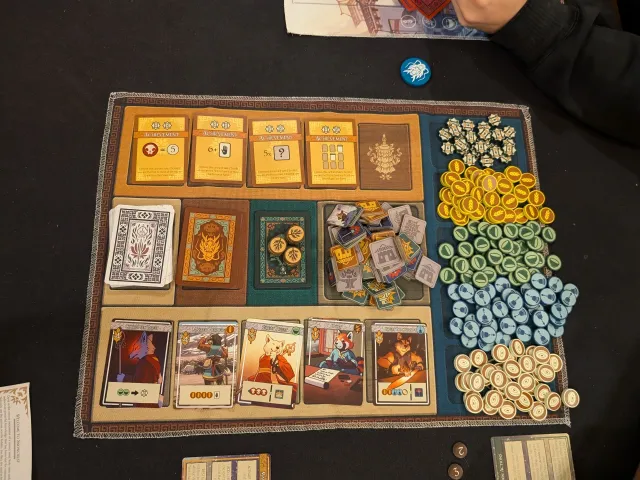
Where you place cards is pretty important – you want to balance the usefulness of the cards against flipping three in a row which triggers the rest action. Cards can’t just be played into the tableau willy-nilly – that’s a recipe for disaster because you’ll constantly be taking your best actions and potentially forcing yourself into taking rest actions more often. This can be good when you need the resources printed on cards, but also might quickly put you behind the competition when it comes to securing scrolls.
There is the additional wrinkle of dealing with Juniper forest cards, buildings, and your own oman tracker too. Over time, a set number of Juniper tokens will be removed from the forest deck, and when that happens players will have to “deal with” the top Juniper cards – this is a bit like an event deck that slowly ticks down as players take specific actions.
When triggered, the active player will take a penalty, every other player will take a penalty, and then the active player will get a bonus of some kind. If you cannot pay the penalty, your man track will move, causing you further problems in the future.
The buildings are also a unique addition to the game. They allow you to get specific resources that you might need (flipping when used) and if you get enough buildings, you can even rack up a few scrolls into your point pool.
I like everything. I think it’s good. I think the card mechanic is fantastic. Unfortunately, I think as easy as this game is to teach – and again, I can do this in less than 10 minutes – there are too many things to consider and trying to tell people what strategy they should use is nearly impossible.
I’ve won and lost in so many ways, and I still haven’t figured out what the strategy is. Sometimes my losses felt unavoidable, and a few times I knew I made mistakes. But what you should do is a bit muddled I think, and there is no easy way to tell someone, “Hey, don’t forget about this aspect of the game.”
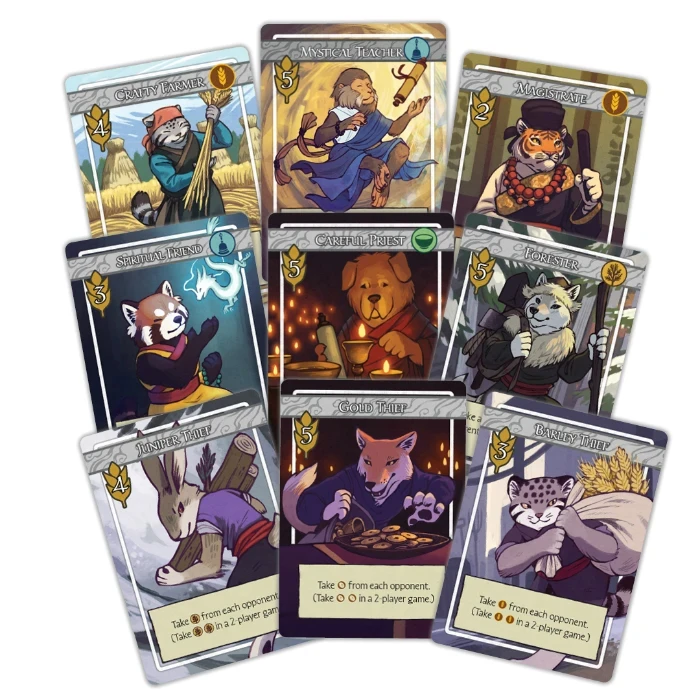
I don’t love how the game can swing when it comes to the various decks of cards that impact the entire table. On the flipside, it creates a decent amount of player interaction, although not interaction that other players can prepare for. It can be VERY random, and for some a lot of randomness isn’t going to equal a good time.
For now, I’m keeping Snowcrest, and I plan to play it more. It is entirely possible that this game just isn’t something I’m going to figure out. It might be a problem for me.
There are times when I overwhelmingly encourage players to pick up games – we are working on a few Grail Games titles and I recommend all of them so far! – and sometimes I encourage consumers to do more research. This is one where I think a bit more research will let you know whether you want to play Snowcrest or not.
One thing is for sure – the card play on your player mat is brilliant, and something inside me hopes this idea comes back somehow in another title in the future.
Article By Adam Roffel