God of War: Sons of Sparta Review
God of War: Sons of Sparta
Publisher:
Developer:
Genre:
PEGI:
Comments:
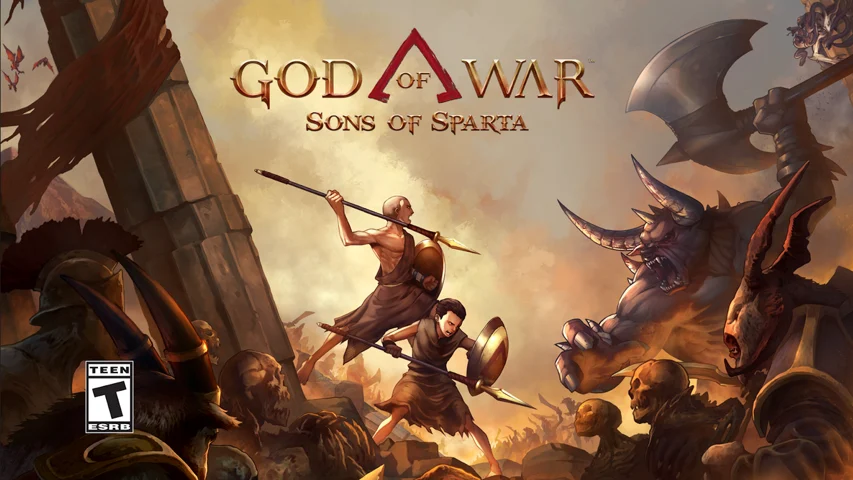
When God of War: Sons of Sparta dropped out of nowhere during Sony’s February 2026 State of Play, it immediately caught people off guard. Not because there was a new God of War game—that alone would’ve been enough—but because this one looked nothing like what the series has become over the past decade. Instead of cinematic camera work and sprawling 3D worlds, Sons of Sparta arrived as a 2D action‑platformer with pixel art visuals and a much smaller scope.
At first glance, it almost feels like a side note. After a few hours, though, it becomes clear this game knows exactly what it is—and why it exists.
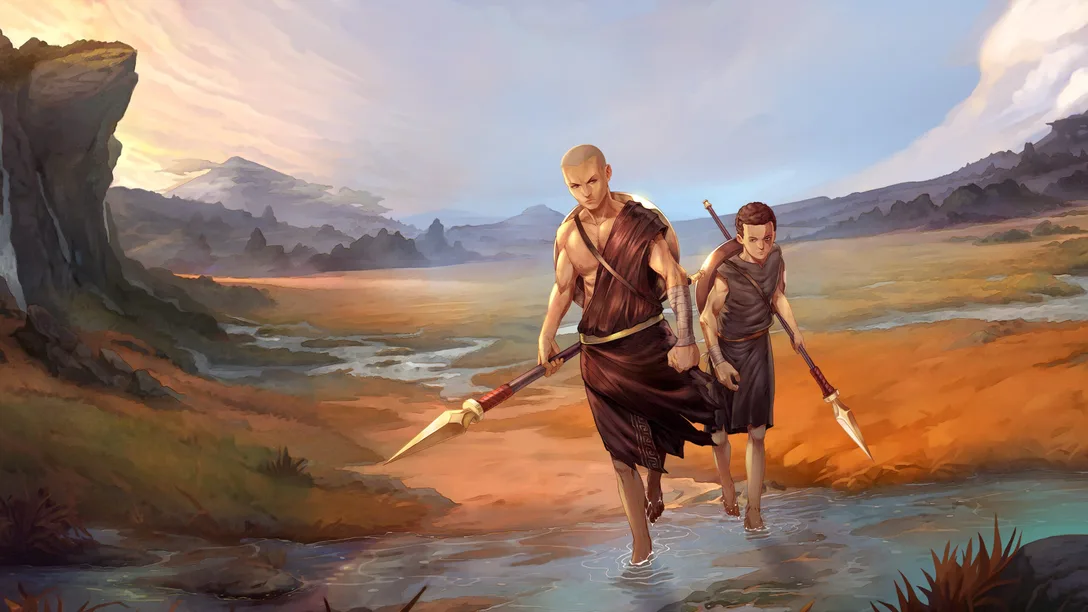
Rather than trying to push the franchise forward, Sons of Sparta looks backward. Way back. This is Kratos before the gods, before the Blades of Chaos, before the tragedies that would define him. It’s a story about a boy raised in violence, learning what Sparta expects of him, and slowly understanding the cost of that expectation.
The story focuses on young Kratos and his brother Deimos during their brutal training in the Agoge. When one of their fellow cadets goes missing, the two leave Sparta to search for him, pushing beyond the rigid structure they’ve been raised in and into a wider, more dangerous world. It’s a simple setup, but that simplicity works in the game’s favor. There are no prophecies here, no world‑ending stakes—just duty, loyalty, and fear.
What really gives the narrative weight is the framing device. The story is told by an older Kratos, voiced once again by TC Carson, as a lesson to his daughter Calliope. That perspective changes how the entire game feels. You’re not just watching events unfold; you’re hearing them filtered through regret, reflection, and hindsight. It doesn’t try to excuse who Kratos becomes, but it does help you understand where it started.
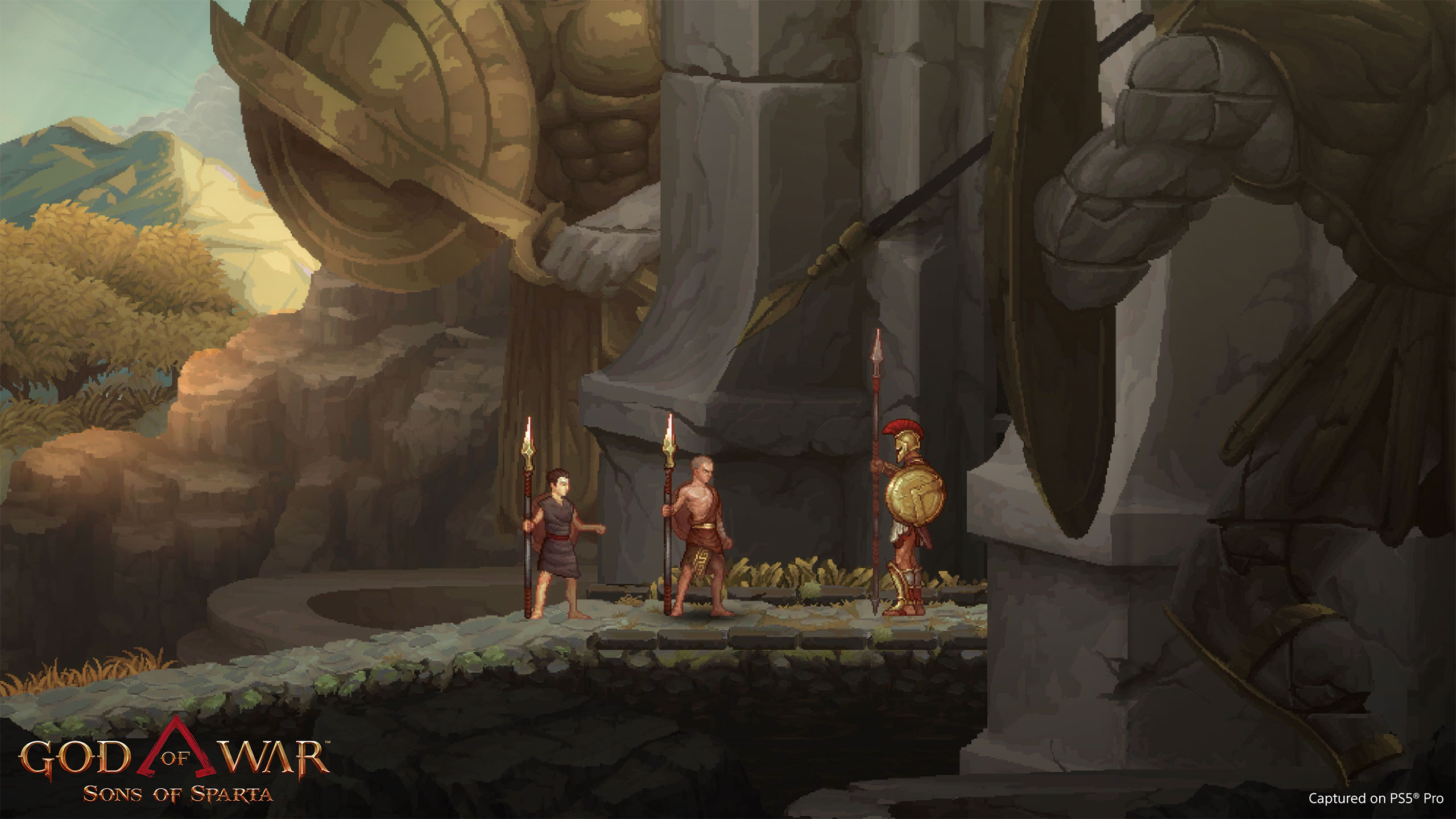
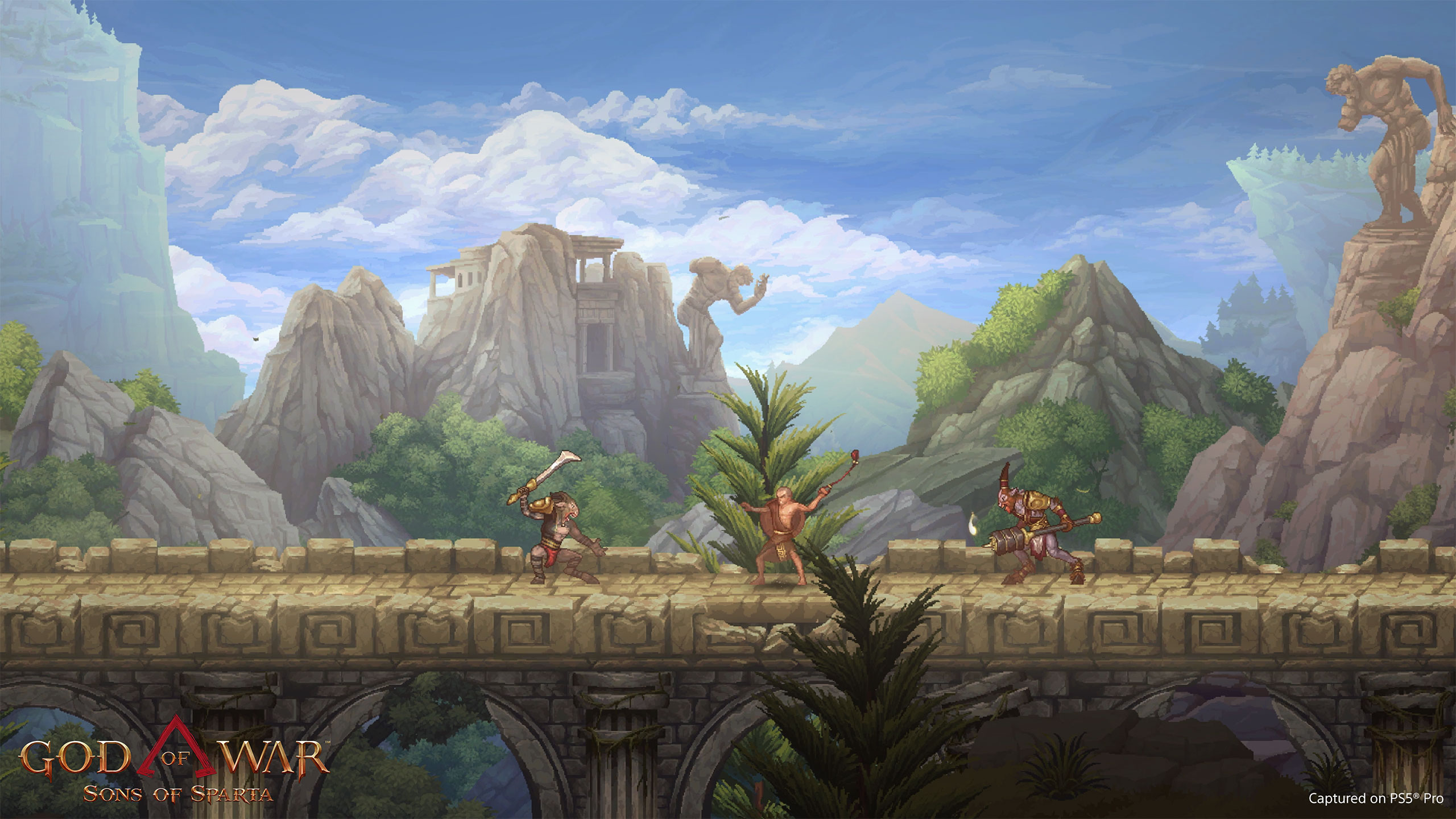
Gameplay is where Sons of Sparta has the most to prove, and for the most part, it delivers. Combat feels surprisingly solid for a 2D God of War. Because this is a prequel, Kratos fights with a spear and shield instead of the Blades of Chaos, and that choice grounds the experience in a way that fits the setting. Attacks have weight, parries feel earned, and rushing into fights without thinking will get you punished.
The game borrows lightly from the Metroidvania playbook. You unlock new abilities, upgrade your equipment, and revisit earlier areas to access paths that were previously blocked. It’s not especially deep, but it’s paced well and rarely frustrating. The focus stays on movement and combat rather than overwhelming the player with systems.
Boss fights are a standout. They’re tough, pattern‑driven, and demand attention. You can’t just overpower them—you have to learn how they move and react accordingly. Winning a boss fight feels less like a cinematic payoff and more like a genuine accomplishment, which suits the game’s more grounded tone.
Visually, Sons of Sparta commits fully to its retro style, and it works. The pixel art is detailed and expressive without being cluttered, and animations do a lot of heavy lifting, especially during combat. Enemy designs draw from Greek mythology but remain readable, which is crucial in a fast‑moving 2D game.
The world itself feels harsh and unwelcoming. Training grounds are oppressive, environments outside Sparta feel dangerous and unfamiliar, and there’s a constant sense that survival—not glory—is the goal. Exploration is straightforward but rewarding, with hidden areas and optional encounters that add just enough depth without bloating the experience.
The audio design quietly ties everything together. The music leans somber rather than heroic, reinforcing the idea that this is not a story about triumph. TC Carson’s narration is the emotional anchor, and hearing his voice again gives the game an authenticity that might otherwise be missing in a smaller spin‑off.
That said, Sons of Sparta isn’t perfect. Enemy variety thins out later in the game, and players expecting the bombastic spectacle of the modern God of War titles may walk away disappointed. This isn’t a replacement for God of War (2018) or Ragnarök, and it never tries to be.
What it is instead is focused, respectful, and surprisingly thoughtful. By stripping the formula down and telling a smaller story, Sons of Sparta adds meaningful context to Kratos’ past without rewriting it. It reminds you that before he was a god or a monster, he was a child shaped by a brutal system that demanded strength at any cost.
In the end, God of War: Sons of Sparta feels less like a spin‑off and more like a quiet companion piece to the larger saga. It won’t be for everyone, but for fans willing to meet it on its own terms, it’s a strong and worthwhile addition to the series.
Article By Kevin Austin