Anno 117: Pax Romana Review
Anno 117: Pax Romana

Publisher: Ubisoft
Developer: Ubisoft Mainz
Genre:
PEGI:
Comments:
The Anno games have always interested me, but for one reason or another I’ve never gotten around to actually playing them. I love civilization building, tycoon style games in the vein of Pharaoh and Cleopatra, Caesar III, and more. In fact, I even played the Anno board game before playing this video game. I’ve heard the franchise has had a rocky go of it, so I’m happy to say I’m going to assume Anno 117: Pax Romana is the best of them all.
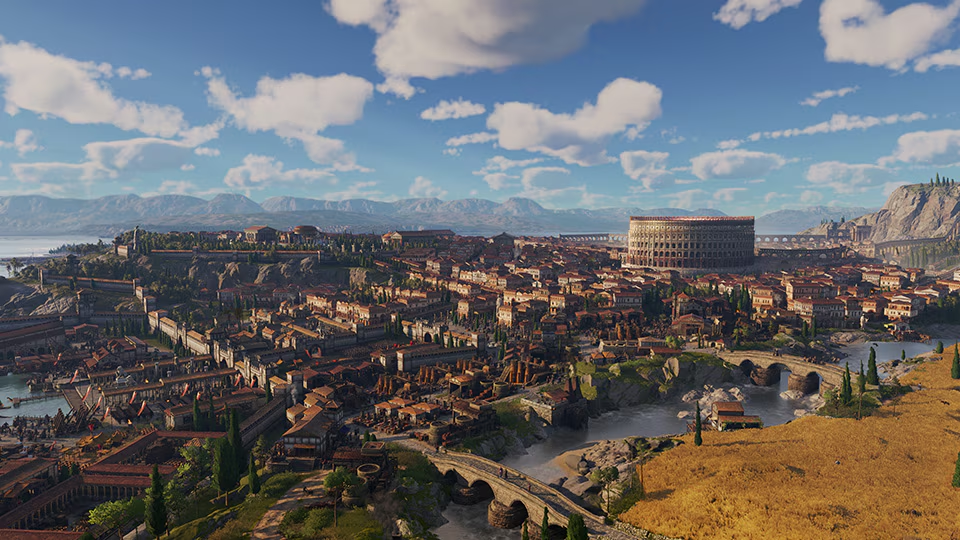
There is immense satisfaction in creating your own island in Anno 117; from humble beginnings of a simple trading port, a grouping of houses, your first few farms – watching it all come together is almost as much fun as making it happen. I’m not generally one to zoom in and check on my citizens, but in Anno 117, I found myself doing it again and again and again. Perhaps it’s the wide array of character animations, or the use of many templates for regular structures keeping things from looking all the same; whatever it is, playing Anno 117 is incredibly satisfying, and I’ve not even told you about the best parts.
The campaign was less than thrilling, and is probably my biggest criticism of the game. The voice acting, while great, seems jumbled together to make the story happen, and the characters speaking always have lip syncing issues. For me, though, the campaign is a means to an end: to teach you all the ins and outs of Anno 117. If you are familiar with the systems at play here, you can probably skip past it and work your way through the game yourself. That would be my recommendation.
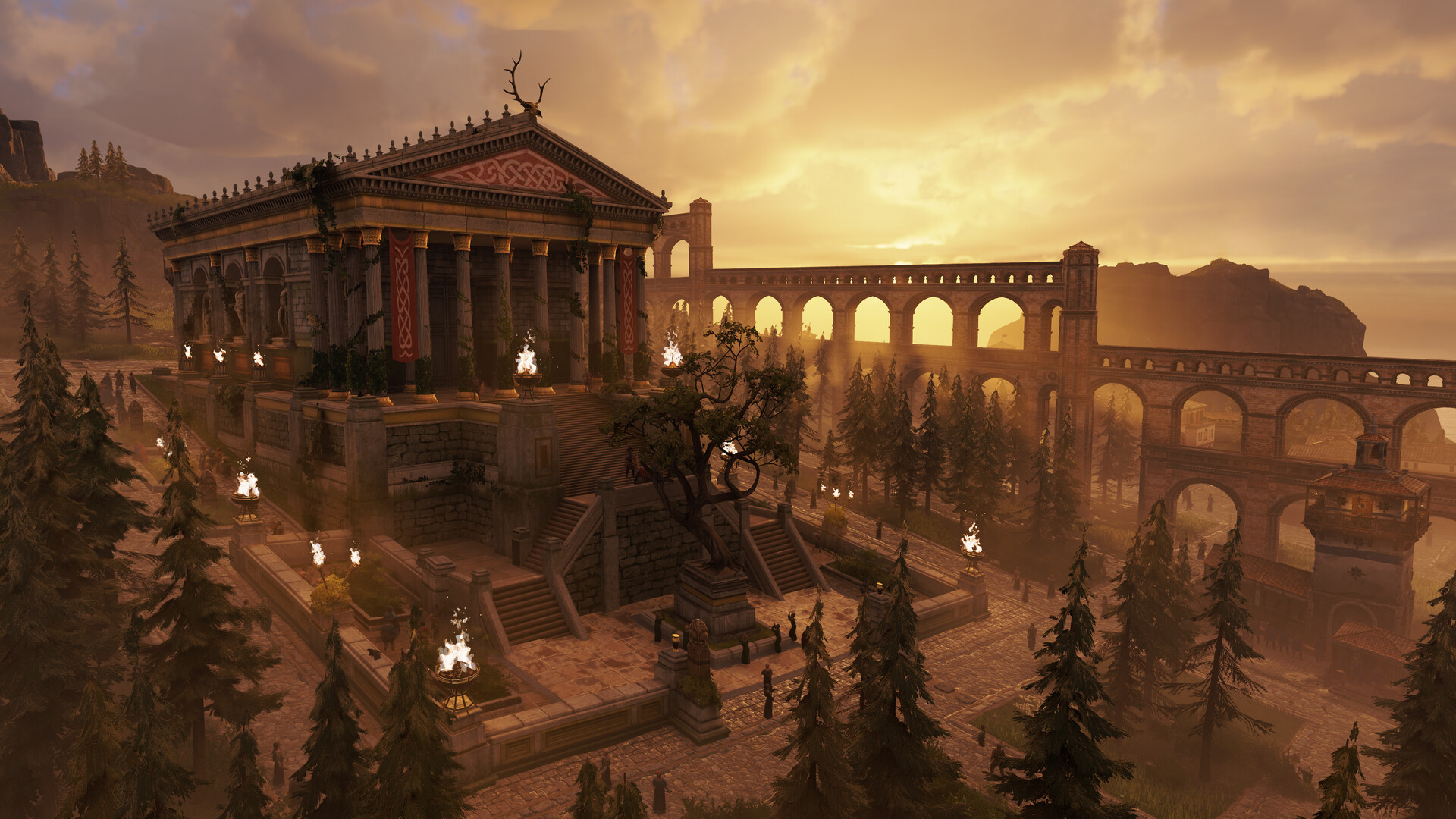
And that about sums up the bad, because from this point forward, everything is either really good or fantastic. There is a lot going on in Anno 117, and if you don’t like to juggle half a million things at once, this is probably not the game for you. City planning is just as important as resource management, and ultimately you aren’t going to produce everything you need in one spot – it’s just not possible. But your empire will grow, and whether you are building towards the next Rome, or trying to uphold the building styles and traditions of the (what I assume) is the Celts, there is something to think about around every corner.
Setting up my empire was as much fun as building it. Specific islands growing and creating specific things, all coming to a central market point and then being shuttled around the empire satisfying the needs of my citizens far and wide. It wasn’t about sending ships from A to B and hoping it all worked out – no, it was creating elaborate trade networks that brought goods to central markets only to be distributed again. It was amazing to setup, and so much fun to watch.
Equally as exciting was watching the empire grow. As you get bigger and bigger, your citizens will start demanding more: beautification, living near landmarks and entertainment, the finest foods and the best clothes. All of this has to be meticulously planned out, and as you watch things grow, you begin to see a real city take shape with wealthy neighborhoods supported by working class hovels. It’s not an idealistic world, but likely an accurate one.
What I was most amazed by, however, was the translation of mouse and keyboard controls to the PlayStation 5 controller. I almost passed this review onto another writer as I wasn’t certain how a game this complex could be broken down and mapped to a bunch of triggers and face buttons. But once again, Ubisoft delivered in a big way, and now I’m wondering what is better: mouse or controller? I think the obvious answer is a controller, but the controller is so well done I’ve had no issues dropping dozens of hours into this game with the controller alone.
If you don’t enjoy building an empire, or like games with a lot less control and precision, than this is probably not the game for you. But if you want to build a massive empire and control every little aspect of it, then hop on board. Your citizens await! Oh, and there is war. Naval and land. Get to it!
Article By Adam